
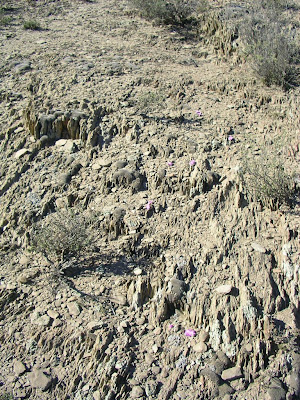
Gibbaeum nebrownii is restricted to the barren shale desert hillsides west of Ladismith in the Little Karoo.
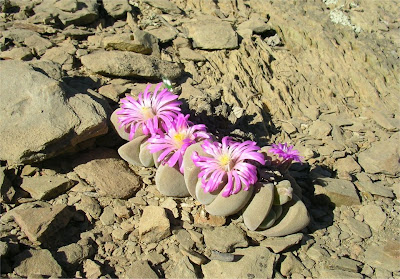
The plants are small and partly withdrawn into the soil. They are easily overlooked when exploring the area, blending perfectly with their surroundings.
Gibbaeum nebrownii is quite easy to cultivate if one is mindful not to over water the plants.
The pink flowers appear in April.
Gibbaeum nebrownii was previously known as Imitaria muirii. Gibbaeum nebrownii in cultivation.
 Gibbaeum nebrownii flower.
 Gibbaeum nebrownii from Kareerivier.
Showing posts with label Gibbaeum. Show all posts
Showing posts with label Gibbaeum. Show all posts
Gibbaeum pubescens is found amongst quartz pebbles in the Little Karoo. Huge stand are seen in the area between Ladismith and Barrydale. Gibbaeum pubescens. A cultivated specimen in flower.
 Gibbaeum pubescens can form large clumps.
 Gibbaeum pubescens habitat. This photograph was taken at Lemoenshoek near Barrydale.
Gibbaeum cryptopodium occurs in the Little Karoo. The plants have a fairly wide distribution and are found from west of Ladismith to south of Oudtshoorn.
Gibbaeum cryptopodium is by no means common. The plants prefer a stony semi-desert like habitat. In the Ladismith area Gibbaeum cryptopodium is usually associated with quartz patches, while more to the east the plants can also occur amongst ferri-crete pebbles.
Gibbaeum cryptopodium is also commonly called "bababoutjies" (Translate "baby buttocks") Habitat of Gibbaeum cryptopodium south of Oudtshoorn.
 Gibbaeum cryptopodium flowering in habitat.
The distribution of Gibbaeum dispar is confined to the areas around Vanwyksdorp in the Little Karoo. From all of the several Gibbaeum species that are found, Gibbaeum dispar seems to prefer bare, desert-like, shale outcroppings while most others prefer quartzite pebbles.
Locally the plants are known as "Bababoudjies" (Baby Buttocks) or Shark Heads.
Gibbaeum dispar does germinate from seed, but it seems that the plants are slightly more difficult to grow then others from the genus.
Subscribe to:
Posts (Atom)
